Dr. Gymbro
←

#peak power

2 articles
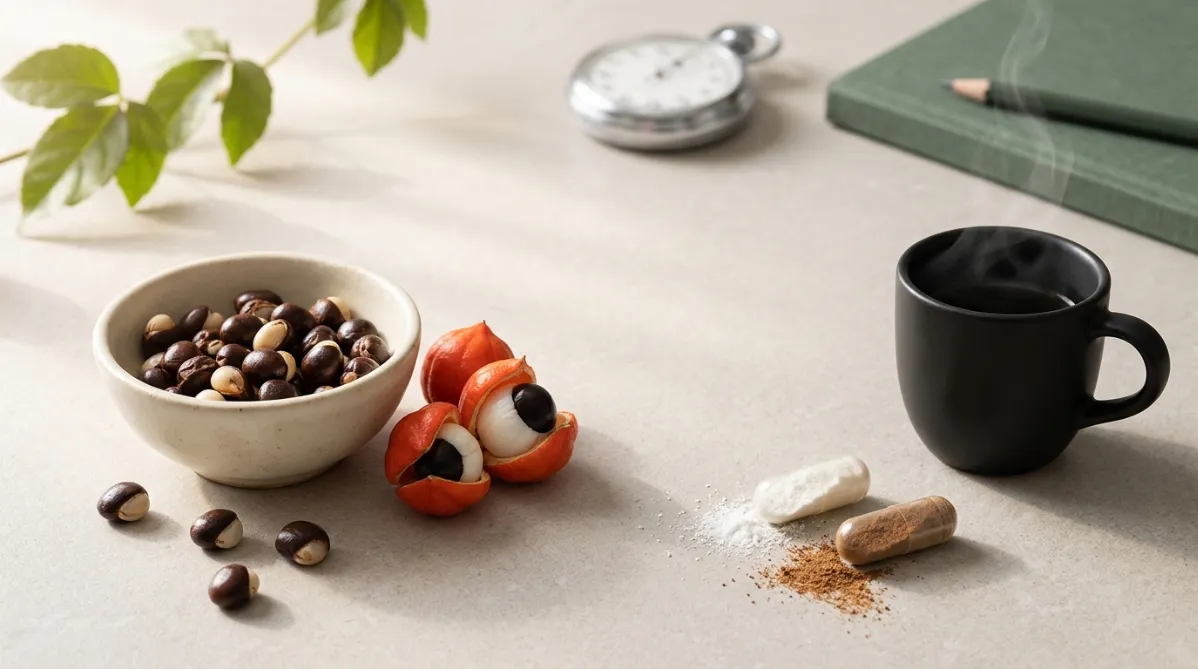
A wide, softly lit editorial flat-lay on a pale warm-gray stone countertop, shot from slightly above. On the left, a small rustic ceramic bowl in matte cream holds a handful of dried guarana seeds, dark glossy brown with pale cream arils, a few spilling onto the surface. Beside it sits a halved fresh guarana fruit in vivid red-orange, split open to show the white flesh and black seed inside, looking like a tiny eye. On the right, two open clear capsules rest side by side. One is filled with fine white caffeine powder, the other with a fine earthy brown guarana powder, and a little of each dusts the stone in delicate, deliberate lines. Between them, a minimalist matte-black espresso cup with a thin ribbon of steam rises on the right edge of the frame. A brushed-steel stopwatch and a slim dark-green linen notebook with a pencil sit in the upper background, slightly out of focus, to hint at performance testing without clutter. A few green leaves of a guarana vine curve in from the top-left corner, catching soft light.

The lighting is natural window light from the left, with gentle long shadows and a subtle warm highlight on the seeds. The palette is muted and modern: warm creams, terracotta red, deep espresso brown, sage green, and charcoal accents. The background is clean with generous negative space on the upper right for headline text. Shallow depth of field, crisp focus on the seeds and capsules, fine grain, and a calm premium magazine look like a contemporary wellness and sports-science journal. No people, no text, no logos, no futuristic elements.
science research

Guaraná vs cafeína: misma dosis, solo el guaraná aumentó la potencia máxima

BY DR. GYMBRO ·

Misma dosis de cafeína, distinta cápsula, y solo el guaraná produjo un aumento estadísticamente significativo de la potencia máxima. En un ensayo cruzado aleatorizado con 18 hombres activos, el guaraná elevó la potencia pico en un 4,0 % frente al placebo, mientras que la cafeína anhidra no alcanzó significación. Sin embargo, el guaraná no superó a la cafeína en la comparación directa y las diferencias entre ambos fueron meramente descriptivas. Aquí se resumen los datos, las limitaciones del estudio y cómo dosificar guaraná según su contenido de cafeína si decides probarlo.
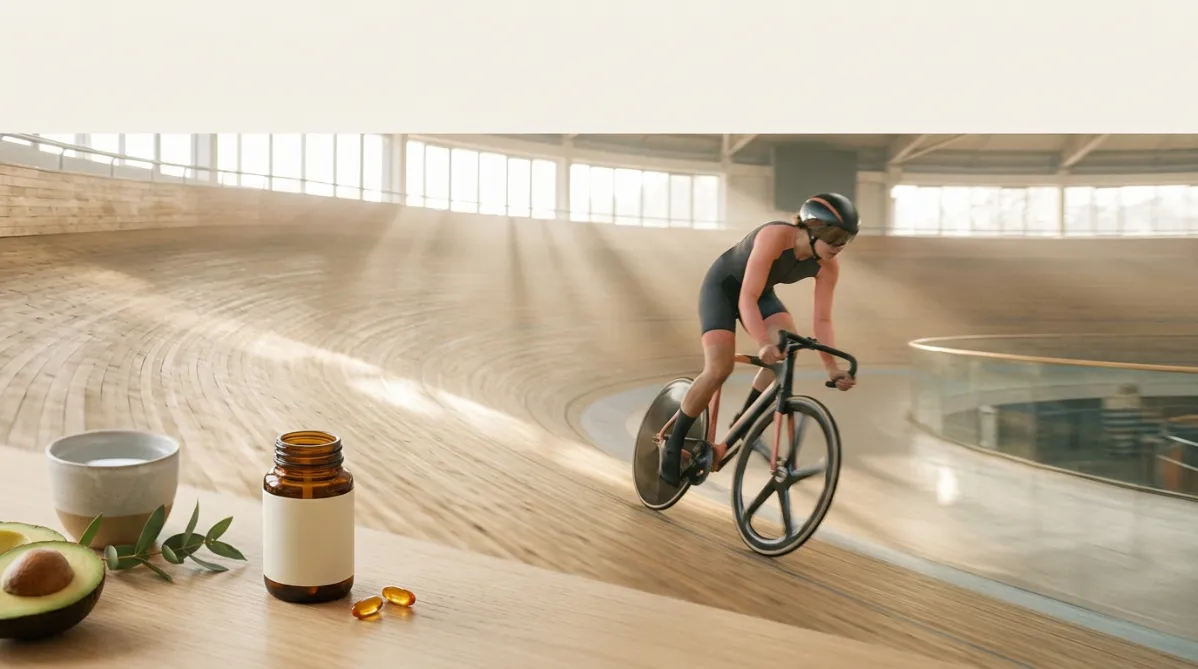
A wide, editorial-style photograph of a professional track cyclist mid-stride on a velodrome's sloping wooden boards, captured from a low side angle with a shallow depth of field. The cyclist is in a sleek matte charcoal and soft coral skinsuit with an aerodynamic helmet, slightly motion-blurred, while the wood grain of the track glows in warm honey tones. Soft morning light streams through high arena windows, creating long, gentle beams and a subtle haze.

In the foreground, slightly out of focus, a minimalist still-life is arranged on a pale oak surface: a small amber glass supplement bottle with a clean cream label, two golden-orange softgel capsules resting beside it, and a ceramic cup of water. A small sprig of green leaves and a halved avocado add a fresh, natural touch, hinting at taking the supplement with fat. The composition places the still-life in the lower left third, with the cyclist blurring into the background on the right, creating a layered sense of depth.

The color palette is warm and refined: creamy off-white, honey wood, muted coral, soft amber, and touches of sage green. A thin, elegant overlay of subtle graph-like lines, such as two delicate rising curves in white, one slightly higher than the other, floats faintly over the upper right negative space, suggesting the small performance gap without any text or numbers. The overall look is clean, modern, and magazine-quality, like a wellness and sports science journal feature, with natural film-like grain, soft contrast, and generous negative space at the top for headline placement. Landscape 16:9 composition, calm and sophisticated mood, no text, no logos.
nutrition

Los aspirantes olímpicos tomaron 300 mg de ubiquinol: la ventaja del 2,5 %

BY DR. GYMBRO ·

En un estudio doble ciego con 100 atletas que se preparaban para los Juegos Olímpicos de Londres 2012, todos mejoraron su rendimiento en bicicleta, pero el grupo que tomó 300 mg de ubiquinol alcanzó un aumento mayor: +11 % frente a +8,5 % con placebo. Esa diferencia de aproximadamente un 2,5 % resultó estadísticamente significativa, aunque el estudio presenta limitaciones, como la falta de control del entrenamiento y vínculos con la industria. Analizamos la diferencia entre ubiquinol y ubiquinona, el significado de los números y por qué esa pequeña ventaja puede ser crucial para un ciclista de élite pero irrelevante para un levantador recreativo. También revisamos la dosis, el momento de la ingesta con grasa, quién debe consultar al médico y si realmente vale la pena el gasto.

This page is available in